What Is an A19 Bulb?
To start our lighting journey, we should first look at the most common shape family in the entire world. The
a19 bulb is the classic, standard pear-shaped light bulb that we have used in our households for over a century. When you ask someone to draw a picture of a light bulb, they will almost always sketch the familiar rounded dome of an A19. It is the default, standard choice for general lighting because it is designed to distribute light evenly in a wide, nearly 360-degree sphere.
What Does “A19” Mean?
Like all light bulb shape codes, the term “A19” uses a simple alphanumeric system to describe its physical appearance and size. The letter and number stand for two specific variables:
- “A” stands for Arbitrary: This simply means the standard, classic pear shape that narrows as it reaches the bottom base.
- “19” indicates the diameter: The number tells you the exact width of the bulb at its widest point, measured in eighths of an inch (1/8″). If we divide 19 by 8, we get 2.375 inches (approximately 60 millimeters) ($19 \8 = 2.375$).
If you see a bulb marked as an A15 or an A21, you now know that they share the exact same pear shape. The only difference is their size. An A15 bulb is smaller (15/8 inches wide), and an A21 bulb is slightly larger (21/8 inches wide).
Is A19 a Shape or a Base?
One of the most common mistakes consumers make is confusing a light bulb’s shape with its base. These are two completely separate physical components:
- A19 refers strictly to the shape of the glass or plastic dome. It describes how the upper body of the bulb looks and how it spreads light.
- E26 refers to the metal screw base at the very bottom. This is the connector that screws into your home’s electrical socket.
Because E26 is the standard medium screw socket in North America, almost every standard a19 light bulb is paired with an E26 base. They are designed to work together as a team, but they are not the same thing. You can occasionally find A19 bulbs with different bases, and you can definitely find E26 bases under completely different bulb shapes like globes or reflectors.
Standard Dimensions of an A19 Bulb
When you are buying bulbs for an enclosed ceiling glass bowl or a compact bedside lamp shade, knowing the exact physical dimensions of your light bulb is vita. If a bulb is too tall, it will stick out of the lampshade. If it is too wide, it will rub against the inside glass of your fixture, trapping heat and causing the bulb to fail early. Let us break down the exact physical standards of an A19 bulb.
Diameter
The standard diameter of an A19 bulb is exactly 2.375 inches (60 millimeters) at its widest point. This consistent width is designed to fit inside standard lamp shade wire clips and fixture throat openings.
Height
While the width of an A19 bulb is strictly standardized at 2.375 inches, the total height can vary slightly depending on the brand and technology inside. Traditional incandescent bulbs measure roughly 4.13 inches (105 millimeters) from the very top of the glass dome to the bottom contact point of the metal screw. Modern LED replacements can occasionally be slightly taller—up to 4.4 inches (112 millimeters)—to accommodate their internal electronic driver circuit boards and heat sink rings.
Typical Weight
Because traditional incandescent bulbs are made of paper-thin glass and a fine wire filament, they are extremely lightweight. However, modern led light bulbs incorporate aluminum heat sinks, ceramic insulation, and heavy plastic drivers inside their bases. Because of this, an LED A19 bulb can feel significantly heavier than an older bulb. Standard A19 LEDs weigh between 1.5 to 3 ounces, which is perfectly safe for any standard household socket.
Common Base Types
In North America, standard residential and commercial sockets operate on 120V line voltage. Because of this, nearly all A19 bulbs utilize the E26 medium screw base. In Europe, Asia, and South America, where residential grids run on 220V–240V electricity, A19 bulbs are instead paired with the E27 base. While E26 and E27 bases look almost identical, their metal threads are spaced slightly differently. Always stick to E26 bases for standard US household fixtures.
Table 1: A19 Bulb Sizing & Technical Specifications
| Physical Feature |
Measurement (Imperial) |
Measurement (Metric) |
Home Sizing Compatibility |
| Maximum Bulb Diameter |
2.375 inches |
60 mm |
Standard; fits standard wire-clip lampshades |
| Typical Bulb Height |
4.13 to 4.4 inches |
105 to 112 mm |
Check clearance in compact enclosed domes |
| Standard Connector Base |
E26 (Medium Screw) |
26 mm Base Width |
Fits standard household medium sockets |
| Typical Operating Voltage |
120 Volts (North America) |
120V Standard |
Runs directly on standard home voltage |
Where Are A19 Bulbs Commonly Used?
Because the A19 shape is designed to spread light evenly in all directions , it is the standard choice for general, ambient household lighting. You will find A19 sockets used in almost every room of your house. Let us look at where they work best:
Ceiling Lights (Flush Mounts)
Standard flush mount and semi-flush ceiling fixtures typically use two or three standard A19 bulbs beneath their frosted glass shades. They are ideal for spreading general, background ambient lighting across bedrooms, high-traffic hallways, and closets.
Pendant Lights
Hanging kitchen island pendants and dining room single-cord drop lights often utilize E26 medium bases with standard A19 bulbs. In fixtures where the bulb itself is highly visible, choosing an ST64 teardrop or an A19 LED filament bulb adds a beautiful, stylish vintage touch.
Table and Floor Lamps
Almost every table lamp on your bedside table and every reading floor lamp in your living room is designed around standard A19 bulbs. The omnidirectional light spread of the A19 is perfect for keeping your reading corners bright and comfortable.
Desk Lamps
Task-oriented study lamps and gooseneck desk fixtures use standard A19 bulbs to provide bright, high-contrast light for working, writing, and drawing. Upgrading to a 4000K (Cool White) LED A19 bulb can help improve concentration.
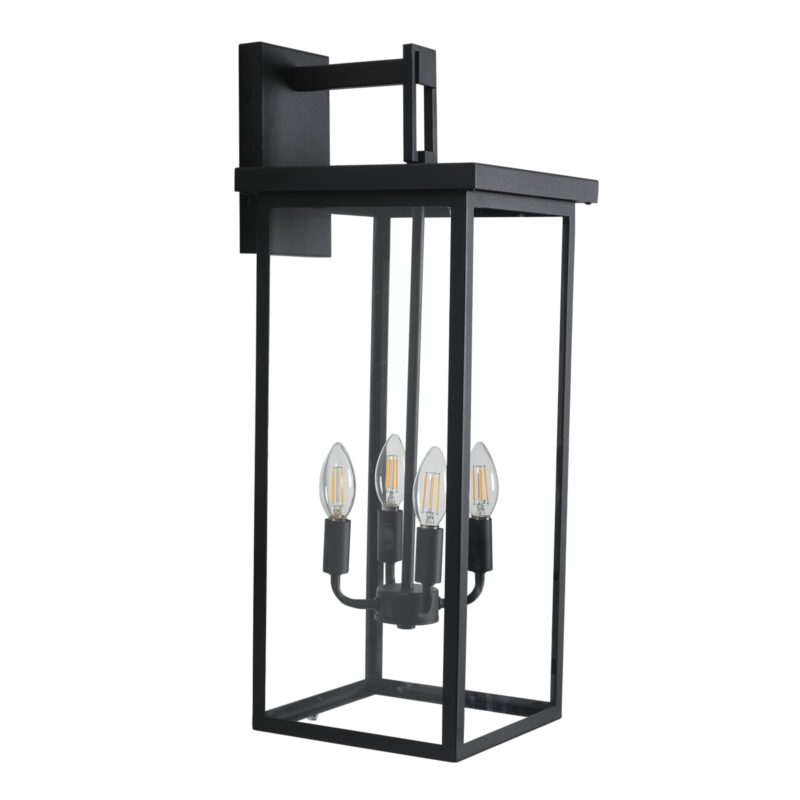
Enclosed Outdoor Wall Lights
Your front porch lantern and exterior garage wall sconces likely utilize standard E26 sockets. Using a weather-rated, durable LED A19 bulb ensures your entryways stay safe and bright during cold winter nights.
Best Lighting Fixtures for A19 Bulbs
To help you complete your home renovation projects with confidence, we have mapped out exactly why the A19 bulb is the perfect team player for your lighting fixtures. Below is our expert matching reference guide, showing how standard A19 bulbs perform across different fixtures:
Table 2: Sockets and Bases in Residential Light Fixtures
| Fixture Type |
Why A19 Bulbs Work Well |
Lighting Depot USA Product Categories |
| Ceiling Lights |
Standard E26 sockets and wide light distribution make A19 bulbs ideal for general illumination. |
Browse Ceiling Lights |
| Pendant Lights |
Suitable for open or semi-open pendants where bulb appearance is visible. |
Browse Pendant Lights |
| Table Lamps |
The most common replacement bulb for household table lamps, providing soft reading light. |
Browse Table Lamps |
| Floor Lamps |
Provides balanced ambient lighting with many brightness options in standard E26 sockets. |
Browse Floor Lamps |
| Outdoor Wall Lights |
Appropriate for enclosed outdoor fixtures when using weather-rated LED A19 bulbs. |
Browse Outdoor Wall Lights |
Types of A19 Bulbs (Technology Comparison)
When you shop for a replacement a19 bulb, you will find several different technologies inside. While all of these share the standard pear shape, they perform very differently when it comes to energy bills, heat output, and how long they will last in your home. Let us explore the four primary options.
LED A19 Bulbs
Modern LED A19 bulbs are the undisputed king of home lighting. Utilizing tiny electronic semiconductors to produce light, they stay completely cool to the touch and can last for decades. They represent the gold standard of energy savings, drawing up to 90% less electricity than standard bulbs.
Incandescent A19 Bulbs
These are the classic glass bulbs first patented by Thomas Edison. They use a hot tungsten metal wire to create light, but they are highly energy-inefficient. About 90% of the power they draw is wasted as heat. Standard general-use incandescent A19 bulbs have been phased out under modern regulations, but specialty high-heat incandescent versions remain available for appliances.
Halogen A19 Bulbs
Halogens are technically an upgraded version of the incandescent bulb. They place the tungsten wire inside a small quartz capsule filled with halogen gas, allowing it to burn hotter, brighter, and slightly more efficiently. However, because they run dangerously hot to the touch, they are also being phased out for general household lighting.
Smart A19 Bulbs
Smart A19 bulbs are standard LEDs equipped with built-in wireless computer chips. Using a phone app or voice assistant, you can adjust the brightness, set automatic timers, or change the bulb’s color temperature throughout the day. They are highly popular for modern bedrooms, living rooms, and home security.
LED A19 Bulbs vs. Incandescent A19 Bulbs
Many homeowners look only at the upfront checkout price when buying light bulbs. While an old-fashioned incandescent bulb might cost less than a dollar, it draws a massive amount of power and burns out after just one year. Let us compare a standard 60-watt incandescent A19 bulb with a modern 9-watt LED A19 replacement over a ten-year period, assuming 3 hours of daily use and a US electricity rate of $0.16/kWh:
Table 3: 10-Year Cost of Ownership Comparison
| Financial & Performance Metric |
LED A19 Bulb (9W) |
Incandescent A19 Bulb (60W) |
| Initial Purchase Price |
~$5.00 |
~$1.00 |
| Rated Lifespan (Hours) |
25,000 to 50,000 hrs |
~1,000 hrs |
| Bulbs Needed Over 10 Years |
1 Bulb |
11 Bulbs |
| 10-Year Electricity Cost |
$15.76 |
$105.12 |
| Total 10-Year Cost (Bulb + Power) |
$20.76 |
$116.12 |
By comparing these figures, the math is incredibly clear. Upgrading a single old bulb to an LED A19 bulb saves you roughly $95 in direct power costs. Across a typical home with 30 sockets, that translates into nearly $3,000 back in your wallet over the next decade.
How to Choose the Right A19 Bulb
When shopping for a replacement a19 light bulb, you must check several key specifications on the package to ensure you get the perfect light output for your space:
Brightness (Lumens)
Remember to ignore wattage and buy by lumens instead. Lumens measure the actual volume of visible light a bulb emits. For soft bedside reading lamps, choose 450 lumens. For standard living room lamps, look for 800 lumens. For bright kitchen islands and work spaces, select 1,100 to 1,600 lumens.
Color Temperature (Kelvins)
Color temperature dictates the mood of your room on the Kelvin scale:
- 2700K (Soft White): Warm, golden light; perfect for bedrooms and living rooms.
- 3000K (Warm White): Bright, friendly light; ideal for kitchens, foyers, and bathrooms.
- 4000K (Cool White): Crisp, energizing light; excellent for home offices and laundry rooms.
- 5000K (Daylight): Stark blue-white light; designed for workshops and garages.
Dimmable vs. Non-Dimmable
If your light fixture is connected to a wall dimmer switch, you must ensure the box explicitly states the bulb is “dimmable”. Installing a non-dimmable LED bulb on a dimmer circuit will cause annoying flickering, loud humming, or premature driver failure .
CRI (Color Rendering Index)
CRI measures how accurately a bulb reveals true colors compared to natural sunlight on a 0–100 scale . For bathroom vanities and kitchen food prep islands, always select bulbs with a high CRI of 90 or above to ensure skin tones and colors look vibrant and natural.
A19 vs. Other Common Bulb Shapes
To build outstanding topical authority, let us compare how the standard A19 shape compares with other common shapes you will see in home design. Choosing the correct shape ensures your fixtures distribute light effectively:
Table 4: Comparative Bulb Shape Matrix
| Bulb Shape Code |
Primary Practical Use |
Standard Connector Base |
Light Output Spread |
| A19 |
Standard everyday household lighting |
E26 (Medium Screw) |
Omnidirectional (360 degrees) |
| A21 |
Oversized higher-output household lighting |
E26 (Medium Screw) |
Omnidirectional (360 degrees) |
| Type B |
Slender decorative chandeliers and sconces |
E12 (Candelabra) |
Decorative glowing ambient |
| G16.5 |
Small spherical vanity and mirror accents |
E12 (Candelabra) |
Soft aesthetic ambient |
| BR30 |
Indoor recessed ceiling downlights |
E26 (Medium Screw) |
Wide floodlight (Soft edges) |
| PAR38 |
Outdoor security and directional spot lighting |
E26 (Medium Screw) |
Focused spotlight (Hard edges) |
Can You Replace an A19 Bulb with an LED?
Yes, swapping out your old-fashioned incandescent bulbs for modern LED replacements is incredibly simple. Because they share the exact same physical dimensions and E26 screw bases, LEDs are a direct, “drop-in” upgrade.
Wattage Conversion & Energy Savings
When you buy an LED A19 bulb, you will see a far lower wattage listed on the box because LEDs require up to 90% less electricity to produce the exact same amount of light. Below is our quick wattage-to-lumen conversion reference chart:
Table 5: Incandescent to LED Sizing and Conversion Chart
| Old Incandescent Wattage |
Standard LED Power Draw |
Target Brightness (Lumens) |
Best Household Room Use |
| 40 Watts |
5 to 6 Watts |
~450 Lumens |
Soft Bedside Lamps, Accent Wall Sconces |
| 60 Watts |
8 to 10 Watts |
~800 Lumens |
Standard Living Room Lamps, Overhead Ceiling Fixtures |
| 75 Watts |
10 to 12 Watts |
~1,100 Lumens |
Bright Kitchen Islands, Dining Room Pendants |
| 100 Watts |
14 to 16 Watts |
~1,600 Lumens |
Home Offices, Study Desk Lamps, Basements |
Common Mistakes When Buying an A19 Bulb
To save yourself annoying return trips to the store, keep these five common buying mistakes in mind:
- Confusing A19 with E26: Remember, A19 is the physical shape of the glass dome, while E26 is the 26mm medium screw base. Always check both specifications before purchasing.
- Choosing the Wrong Brightness: Do not guess by wattage. Always buy by lumens to ensure your rooms are neither too dark nor blindingly bright.
- Ignoring Color Temperature: Installing a clinical 5000K daylight bulb in your cozy bedroom can suppress melatonin and make it difficult to sleep. Stick to 2700K Soft White for evening areas.
- Buying Non-Dimmable for Dimmer Switches: If your fixture uses a wall dimmer slide, non-dimmable LED A19 bulbs will flicker, hum, or burn out early.
- Exceeding Maximum Fixture Wattage: Sockets have strict safety limits. Ensure your bulb’s power draw does not exceed the safe limit listed on your fixture’s sticker.
Frequently Asked Questions
1. What does A19 mean on a light bulb?
A19 indicates the bulb belongs to the standard “Arbitrary” pear-shaped family and measures exactly 19 eighths of an inch (2.375 inches or 60mm) wide at its broadest point.
2. Is A19 the same as E26?
No, A19 and E26 are completely separate codes. A19 refers strictly to the standard pear-like shape of the glass or plastic dome. E26 refers to the 26mm metal screw base at the very bottom. Standard A19 bulbs are almost always paired with E26 bases in North America, but they represent different specifications.
3. Are all A19 bulbs LED?
No, you can find A19 bulbs made using incandescent, halogen, and smart technologies. However, highly efficient and long-lasting LEDs are the default choice in stores today.
4. Can I replace a standard incandescent A19 bulb with an LED A19 bulb?
Yes, absolutely. Because they share the exact same physical size and standard E26 medium screw base, LED A19 bulbs serve as direct, drop-in replacements.
5. What light fixtures use A19 bulbs?
Standard A19 bulbs are the default choice for living room table lamps, reading floor lamps, bedroom ceiling flush mounts, and kitchen pendant lights.
6. How bright is a standard 60W equivalent A19 bulb?
A standard 60-watt equivalent A19 bulb produces 800 lumens of brightness. When using LED technology, it will draw only about 9 watts of electricity.
7. Is A19 the most common household bulb shape?
Yes, A19 is the most popular household light bulb shape in the world. It is the default standard for everyday ambient room illumination.
8. Are A19 LED bulbs dimmable?
Yes, many LED A19 bulbs are dimmable, but you must confirm the package explicitly states the bulb is “dimmable” and use an LED-compatible dimmer.
9. Can A19 bulbs be used in outdoor fixtures?
Yes, you can use A19 bulbs outdoors, but they must be rated for outdoor use (damp or wet locations) and installed inside a suitable protective glass lantern.
10. What is the difference between A19 and A21 bulbs?
While both share the exact same pear shape, the A21 bulb is slightly larger than the standard A19, measuring 2.625 inches (21 eighths of an inch) wide. A21 bulbs are designed for high-lumen, high-brightness applications.
Conclusion
As we have explored, mastering the art of home lighting is not merely about choosing the highest wattage or the cheapest box on the shelf. It is about finding the perfect harmony between your light fixture, its base type, its shape, and the color temperature needed for your daily life. When you select a bulb with the correct base and shape, you ensure your fixtures work safely and efficiently. When you dial in the ideal lumens and Kelvin color temperature, you transform your rooms from simple, dark spaces into comfortable, cozy, and highly functional environments.
Every gorgeous light fixture—whether it is a grand tiered chandelier hanging in your entryway, a sleek vanity bar over your bathroom mirror, or a delicate accent sconce by your bed—deserves a light bulb that matches its beauty. Having the perfect fixture with the perfect bulb is what truly brings a home to life. As you set out to upgrade your home lighting, remember to take your time, check your codes, and experiment with different warm temperatures to find the perfect look for your space.
Ready to Illuminate Your Home Beautifully?
At
LightingDepotUSA, we do not simply design the highest-quality modern light fixtures; we build the gorgeous, timeless vessels that bring your favorite standard E26 A19 bulbs to life. From elegant kitchen island pendants and warm bedroom flush mounts, to stylish table lamps and durable outdoor wall sconces, our curated collections provide the perfect centerpiece for every room in your home. Browse our exclusive catalog today to complete your home design project with confidence.