What is the Best Color Temperature for Bathroom Lighting? A Complete Guide

The Fundamentals – Decoding the Language of Light
Before we can choose the right light, we need to speak the language. The two most important terms in lighting are not complicated, but understanding them is the key to unlocking a perfectly lit space. Let’s demystify them.
What is Color Temperature, and Why is it Measured in Kelvin (K)?
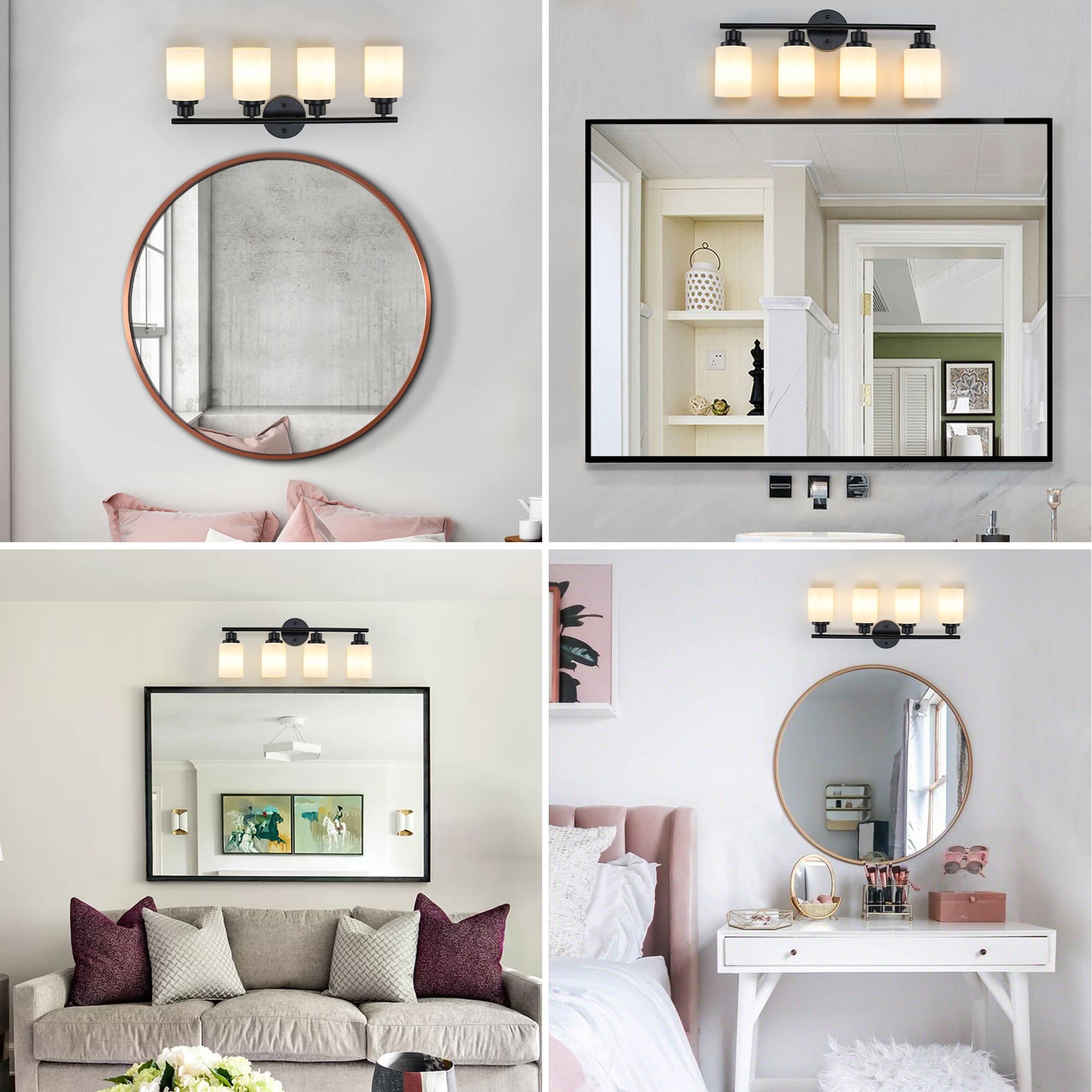
Think of color temperature as a thermostat for the color of light. It has nothing to do with how hot the bulb gets. Instead, it measures the color appearance of the light itself on a scale from warm to cool. This scale is measured in units called Kelvin (K).
- Low Kelvin numbers produce a warm, cozy, yellowish light, similar to a candle flame or a traditional incandescent bulb.
- High Kelvin numbers produce a cool, crisp, bluish light, similar to a clear blue sky at noon.
The Kelvin Scale Explained: A Visual Journey from Warm to Cool
Understanding this scale is the first step to making an informed choice. Here’s a simple breakdown of the ranges you’ll encounter for home lighting.
| Kelvin Range | Common Name | Visual Analogy | Mood / Feeling |
|---|---|---|---|
| 2000K – 2700K | Ultra Warm White | Candlelight, Sunset | Intimate, Cozy, Romantic |
| 2700K – 3000K | Warm White | Traditional Incandescent Bulb | Relaxing, Inviting, Comfortable |
| 3100K – 4500K | Neutral / Cool White | Bright Midday Sun | Bright, Clean, Energizing |
| 4600K – 6500K | Daylight | Overcast Sky, Blue Sky | Crisp, Alert, Focused |
What is Color Rendering Index (CRI), and Why is it Just as Important?
If Kelvin is the color of the light, then CRI is the truthfulness of the light. It’s a score from 0 to 100 that measures how accurately a light source reveals the true colors of objects compared to natural sunlight (which has a perfect CRI of 100).
Why a High CRI is Non-Negotiable for a Bathroom Vanity
This is the solution to the “makeup problem.” A light with a low CRI (below 80) can distort colors, making your skin tone look unnatural, your foundation seem off, and your clothing appear a different shade. For any task where color accuracy is critical—like applying makeup, matching an outfit, or even noticing a skin issue—a high CRI is absolutely essential. You are spending your time and money on your appearance; you deserve to see it accurately.
Your CRI Cheat Sheet: For a bathroom, especially around the mirror, aim for a CRI of 90 or higher. This is the gold standard for excellent color rendering and will ensure that what you see in the mirror is what you see in the real world.
The Main Event: The 3000K vs. 4000K vs. 5000K Showdown
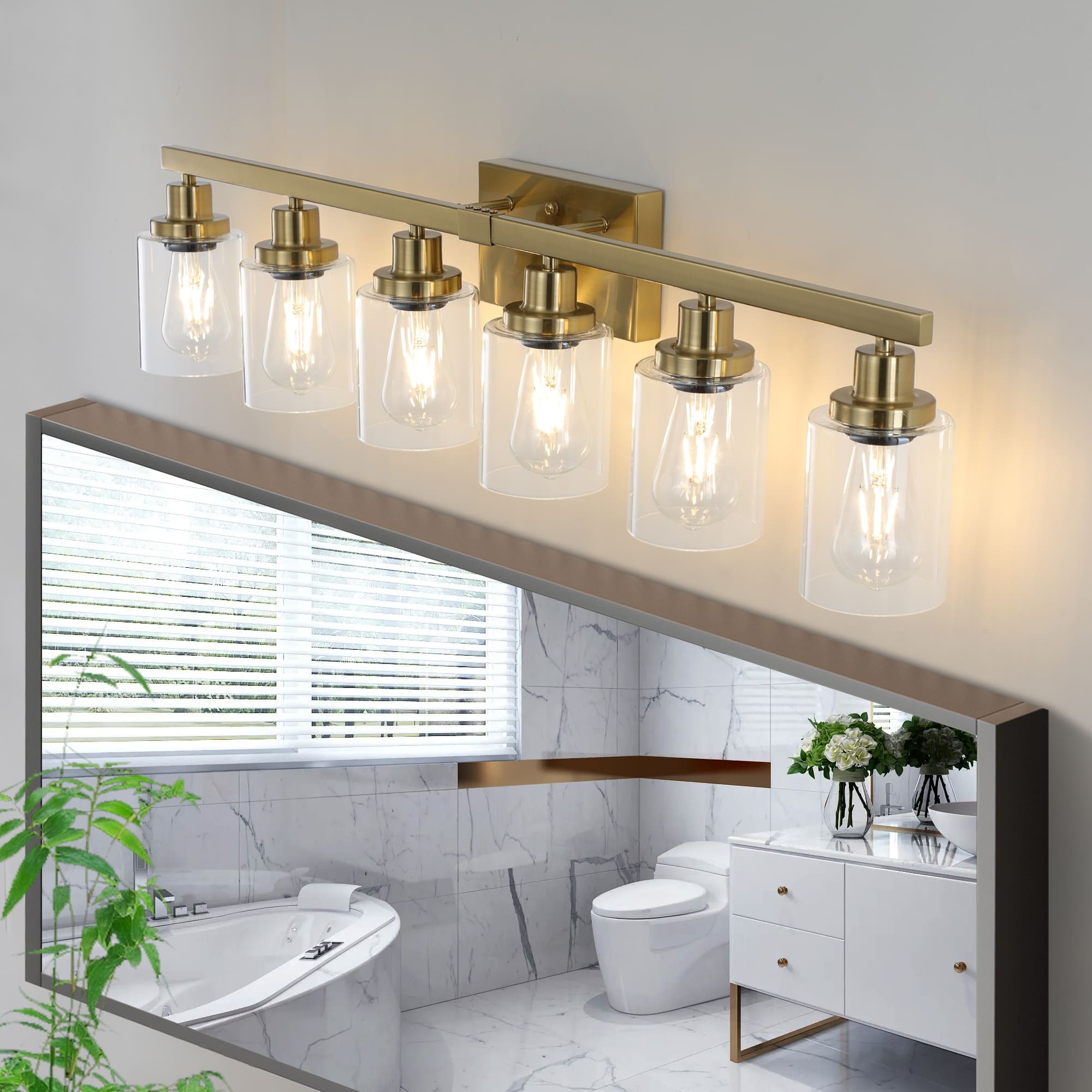
This is the core question for most people. While the full range of Kelvin is broad, the choice for a modern bathroom almost always comes down to one of these three popular options. Each has distinct advantages and disadvantages.
The Case for Warm White (2700K – 3000K): The Spa Sanctuary
This is the light of a luxury hotel, a high-end spa, or a cozy living room. It’s warm, soft, and creates an immediate sense of relaxation and comfort.
- The Pros: The warm, yellowish glow is incredibly flattering to skin tones, helping to soften minor blemishes and create a healthy look. It fosters a serene, intimate atmosphere that is perfect for unwinding in a long bath or performing a relaxing evening skincare routine.
- The Cons: This warmth comes at the cost of color accuracy. The strong yellow hue can make it difficult to distinguish between similar dark colors (like navy vs. black) and can significantly alter the appearance of makeup.
- Best Use Cases: Ambient overhead lighting (especially on a dimmer), decorative sconces, or as the primary light in a powder room where precise tasks are less important.
The Case for Neutral White (3500K – 4000K): The All-Round Workhorse
This is the balanced “Goldilocks” option. It provides a clean, clear white light that isn’t too yellow or too starkly blue. It’s a versatile and highly functional choice.
- The Pros: This range offers excellent color rendering, making it very good for general grooming tasks like brushing your teeth, doing your hair, or everyday skincare. It creates a clean, modern, and inviting feel that is bright without being harsh.
- The Cons: Because it’s a safe middle ground, it can sometimes lack the “wow” factor of a very warm, atmospheric light or the clinical precision of a very cool light.
- Best Use Cases: The primary overhead ambient lighting in any bathroom, or as the main light source in a busy family or kids’ bathroom that needs to serve many purposes well.
The Case for Daylight (4100K – 5000K+): The Precision Powerhouse
This is the light of clarity and energy. It closely mimics natural, indirect daylight, providing the most accurate color rendering possible for detailed work.
- The Pros: It is the absolute best choice for any task that requires precision. For applying detailed makeup, shaving with perfect accuracy, or tweezing, this crisp light reveals every detail. It also creates a bright, energizing atmosphere that can help you feel more alert and awake in the morning.
- The Cons: The downside of all that clarity is that it can feel stark, harsh, or clinical if it’s the only light source in the room. It can also be unflattering to skin tones, highlighting every minor imperfection.
- Best Use Cases: This color temperature should be used strategically for task lighting, such as being integrated directly into a high-quality LED vanity mirror.
| Bathroom Activity | 2700K – 3000K (Warm White) | 3500K – 4000K (Neutral White) | 4100K – 5000K+ (Daylight) |
|---|---|---|---|
| Applying Detailed Makeup | Poor (Distorts colors) | Good | Excellent |
| Shaving or Grooming | Fair | Good | Excellent |
| Relaxing in the Bathtub | Excellent | Fair | Poor (Too stimulating) |
| General, Everyday Use | Good | Excellent | Good |
The Professional Strategy – Layered Lighting by Bathroom Zone
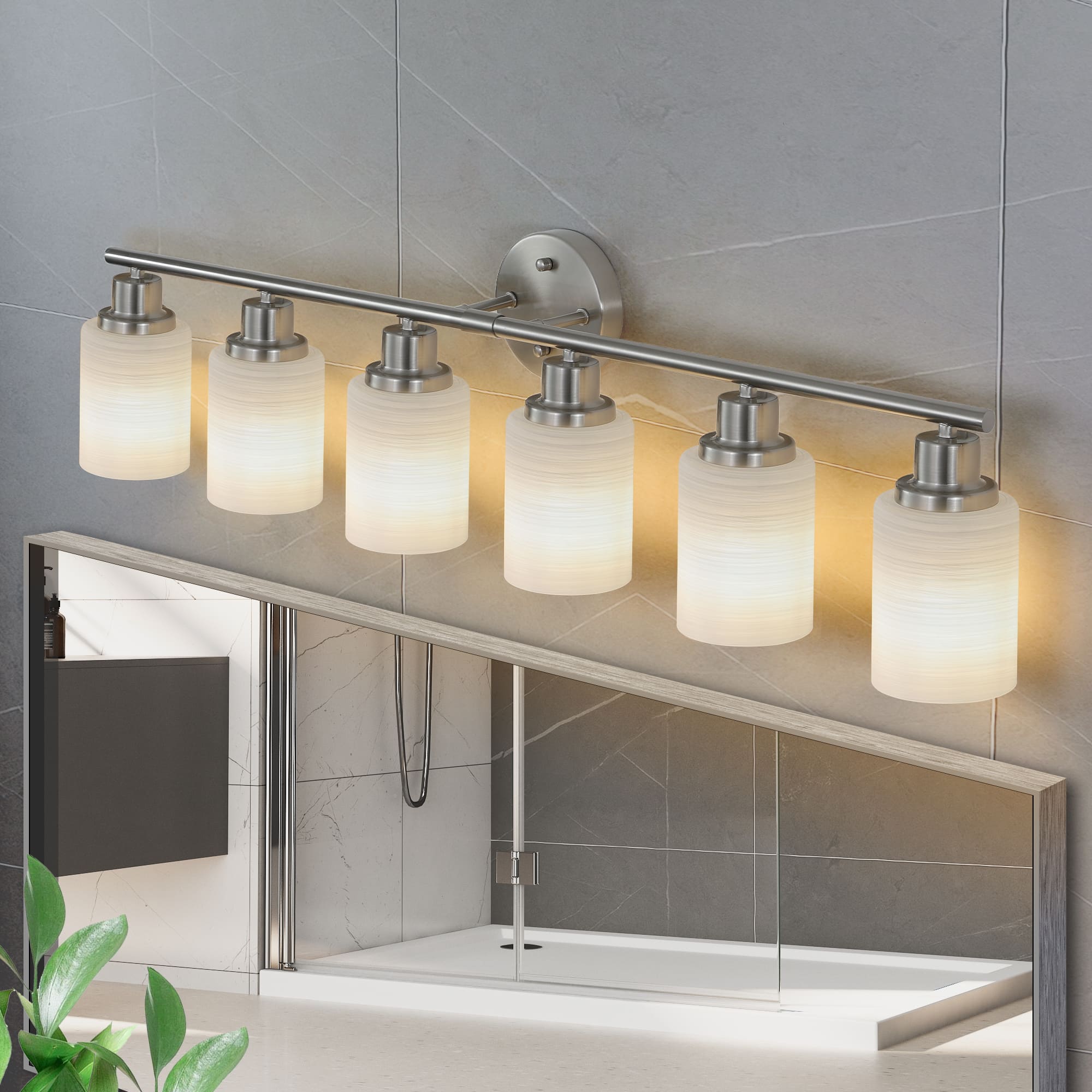
So which one is the best? The answer is: you don’t have to choose just one. The secret that interior designers use is called “layered lighting.” It’s about using different types of light with different color temperatures in specific zones to create a bathroom that is perfectly functional and beautifully atmospheric.
The 3 Layers of Light: Ambient, Task, and Accent
A professional lighting plan combines three distinct layers:
- Ambient Light: This is the general, overall illumination for the room. It fills the space and allows you to navigate safely. It’s your foundational layer.
- Task Light: This is bright, focused light aimed at a specific work area. In the bathroom, the vanity is the primary task zone.
- Accent Light: This is decorative lighting used to highlight an architectural feature, a piece of art, or to create a mood.
How to Light Each Bathroom Zone for a Perfect Result
By assigning a different color temperature to each layer and zone, you get the best of all worlds.
Zone 1: The Vanity & Mirror – The Task Zone
Goal: Shadow-free, color-accurate illumination for your face.
This is where precision matters most. The best way to achieve this is with vertical light fixtures (sconces) mounted on either side of the mirror at roughly eye level, or with a high-quality LED mirror that has lighting integrated into the glass. An overhead light alone will cast harsh shadows under your eyes, nose, and chin.
- Recommended Kelvin: 4000K to 5000K. This provides the clarity you need.
- Recommended CRI: 90+. This is non-negotiable for accurate color.
Zone 2: The Shower & Bathtub – The Relaxation Zone
Goal: A safe, soothing, and relaxing spa-like glow.
The lighting in this area should feel soft and serene. A single, wet-rated recessed can light placed over the shower or tub is usually sufficient. The key is to connect this light to its own, separate dimmer switch.
- Recommended Kelvin: 2700K to 3000K. This warm light promotes relaxation.
- Must-Have Feature: A dimmer switch to adjust the intensity.
Zone 3: The Open Floor – The Ambient Zone
Goal: General, comfortable illumination for moving around the space.
This is your main source of light, typically coming from recessed ceiling lights or a central decorative flush-mount fixture. This light fills in the gaps between your task and accent lighting.
- Recommended Kelvin: 3000K to 4000K. A good neutral base that works well with both the warm and cool lights in your other zones.
Zone 4: The “Wow” Factor – The Accent Zone
Goal: To add a touch of luxury, highlight a design feature, and create mood.
This is where you can get creative. Accent lighting is the secret ingredient that makes a bathroom feel like a high-end hotel. Consider adding LED strip lighting under a floating vanity, in a ceiling cove, or behind a mirror to create a beautiful, soft glow.
- Recommended Kelvin: 2700K to 3000K. A warm glow here feels luxurious and inviting.
Advanced Topics & Smart Tech Solutions
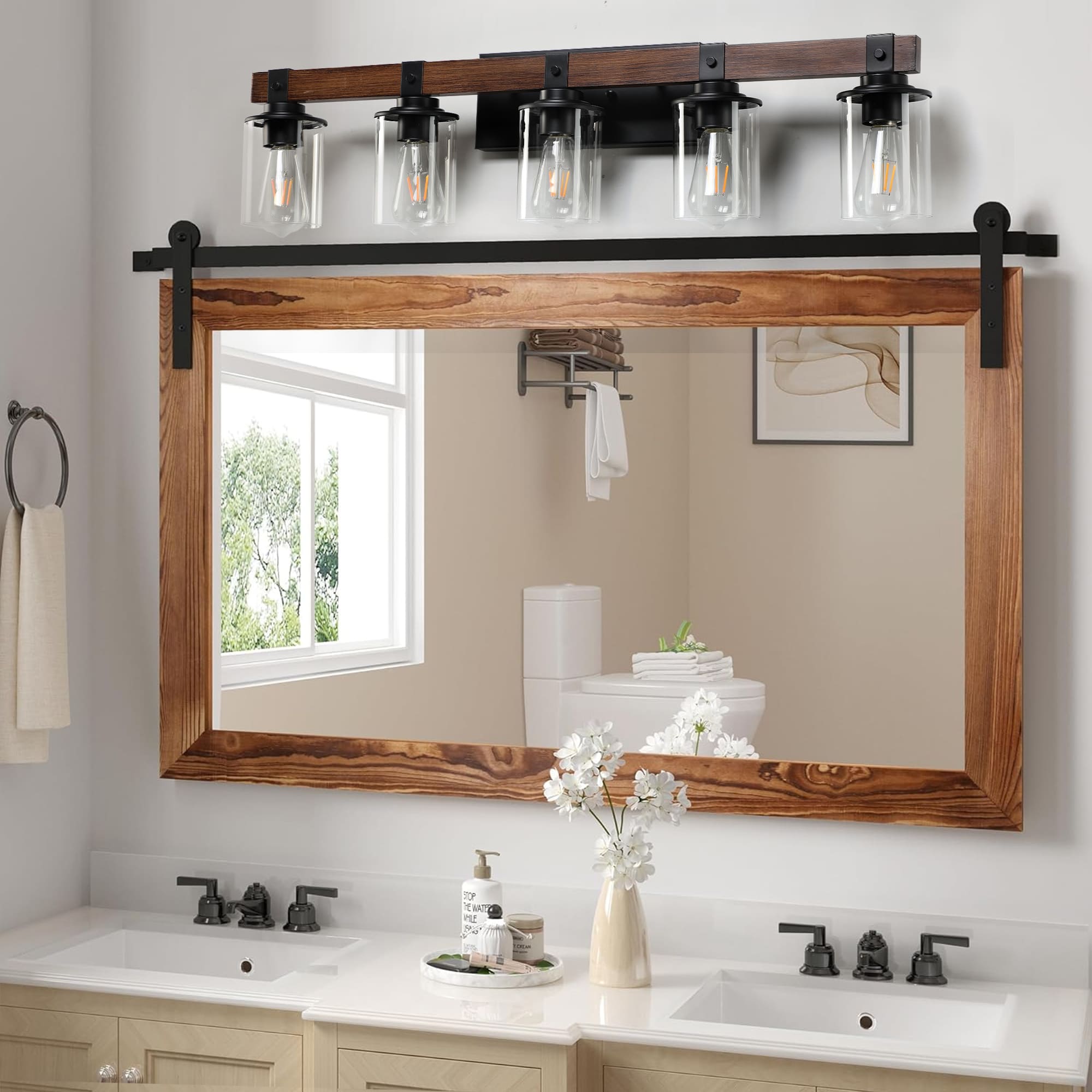
Ready to take your bathroom lighting to the next level? Modern technology offers incredible solutions that provide ultimate control and flexibility, eliminating compromise entirely.
The Ultimate Solution: How Dimmers and Tunable Tech Provide Total Control
A simple dimmer switch on every light is the most cost-effective upgrade you can make, allowing you to adjust brightness for any mood. But the true game-changer is “tunable” technology.
- Tunable White Technology: Imagine having one light fixture that can be all three color temperatures! This is what tunable white LEDs do. Often found in high-end LED mirrors and fixtures, they allow you to change the color temperature with a remote or a wall control. You can have a bright 5000K light for getting ready in the morning and a cozy 3000K light for relaxing at night, all from the same fixture.
- Dim-to-Warm Technology: This clever tech mimics the warm, cozy glow of a classic incandescent bulb. As you dim the light down, the color temperature automatically gets warmer. At full brightness, it might be a clean 3000K, but at its lowest setting, it could be an intimate 2200K, creating a perfect candlelight effect for a bath.
How Do My Paint Colors and Finishes Interact with Color Temperature?
Your light is only as good as the surfaces it reflects off of. A simple rule to remember is that the color of your light will amplify colors in your design that are similar to it.
| Bathroom Design Style | Dominant Colors & Finishes | Best Color Temperature to Enhance the Look |
|---|---|---|
| Warm & Traditional | Cream, beige, wood tones, brass, oil-rubbed bronze | 2700K – 3000K (Warm White) |
| Cool & Modern | Bright white, gray, blue, chrome, polished nickel | 4000K – 5000K (Cool White) |
| Transitional / Balanced | Greige, light woods, mixed metals | 3000K – 4000K (Neutral White) |
Putting a very warm light in a cool, gray-and-white bathroom can make your pristine white tiles look dingy and yellow. Conversely, putting a very cool, bluish light in a cozy, traditional bathroom can wash out the richness of the wood and make the space feel cold and sterile.
Conclusion: It’s Not About One “Best” Color – It’s About a Smart System
The quest for the perfect bathroom lighting isn’t about finding a single magic Kelvin number. It’s about creating a flexible, layered system that serves your different needs at different times of the day. It’s about putting the right color of light, in the right place, for the right task. By layering a crisp, high-CRI task light at your vanity with a warm, dimmable ambient light overhead, you can create a bathroom that is not only beautiful but also perfectly and effortlessly functional.
You are now equipped with the knowledge to design your lighting like a professional, creating a space that energizes you in the morning and relaxes you at night.
Frequently Asked Questions (FAQs)
What is the single best, all-around color temperature if I can only choose one?
If you absolutely must choose only one, a 3500K to 4000K neutral white is the most versatile and functional choice. It provides a good balance of brightness and color accuracy for tasks without feeling overly harsh or clinical. However, a layered approach with multiple color temperatures is always superior.
Is 3000K or 5000K better for applying makeup?
For the most accurate makeup application that will look true-to-life in natural daylight, 5000K combined with a high CRI (90+) is technically the best. However, many people find this light a bit harsh. A 4000K light is an excellent compromise that provides great color accuracy with a slightly softer feel. 3000K is generally too warm and can distort colors.
Can I mix different color temperature bulbs in the same bathroom?
Yes, you absolutely should! This is the essence of a professional “layered” lighting plan. The key is to separate them by zone and function. Use a cooler temperature for your task lighting at the vanity, and a warmer temperature for your ambient or accent lighting. Just avoid mixing different color temperature bulbs in the same fixture, as this will look jarring.
Are LED lights a good choice for bathrooms?
LEDs are the best possible choice for bathrooms. They are incredibly energy-efficient, last for tens of thousands of hours, produce very little heat, and are available in the widest possible range of color temperatures and high CRI options. They also power modern solutions like tunable white and dim-to-warm technology.
Should I put all my bathroom lights on a dimmer?
Yes, if possible. At a minimum, the ambient overhead lighting and the light in your shower/tub area should be on dimmers. This gives you incredible control over the mood of the room. A dimmer is the most cost-effective way to make your lighting flexible, allowing you to go from bright and functional to soft and relaxing with a simple slide or tap.